IB Diploma Programme: Digital Society (SL/HL)

Categories: Digital Society
Wishlist Share

About Course

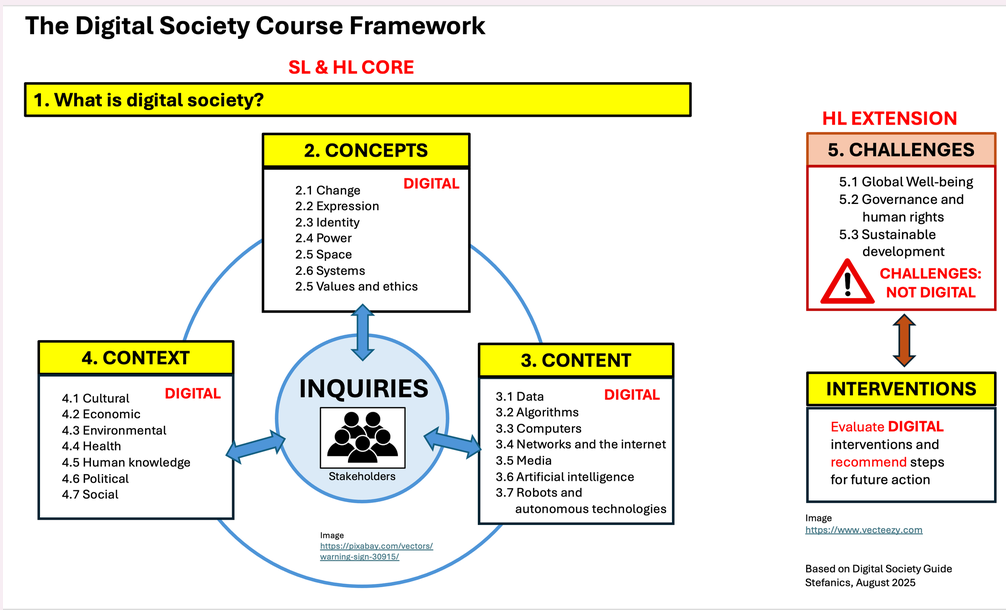
A structured, tutor-led course exploring the IB Diploma Programme Digital Society syllabus at both Standard Level (SL) and Higher Level (HL). Through inquiry-based learning, students investigate how digital systems and technologies shape individuals and societies, examining the relationships between content, concepts and contexts (the 3Cs). Key areas include data and algorithms, artificial intelligence, media, networks, devices, and robotics, with a focus on the social, cultural, political, economic and ethical implications of digital technologies.

Lessons integrate conceptual discussions, real-world case studies, source analysis, and the development of balanced, evidence-based arguments. Students explore key concepts such as change, identity, power, systems, and values and ethics while developing the critical-thinking and communication skills needed to evaluate different perspectives on digital society. The course also provides guided preparation for the Internal Assessment (Digital Society project) and the Higher Level extension, helping students apply their learning to real-world issues and contemporary digital challenges.

Show More

What Will You Learn?

  • Explore digital systems and technologies: Investigate how data, algorithms, artificial intelligence, devices, networks, media and robotics shape digital society.
  • Understand data and digital processes: Examine how data is collected, stored, analysed, used and shared, including the implications for privacy, security and individuals.
  • Evaluate the impact of digital technologies: Analyse the social, cultural, political, economic and ethical implications of technology for individuals and societies.
  • Apply concepts to real-world issues: Use the 3Cs content, concepts and contexts to investigate contemporary digital challenges, consider different perspectives, and develop evidence-based arguments.
  • Develop research and analytical skills: Build the skills needed to investigate digital society issues, evaluate sources, and prepare for the Internal Assessment (Digital Society project).
  • Explore Higher Level content: Engage with the HL extension and examine digital society issues in greater depth, developing more sophisticated analysis and evaluation skills.

Course Content

Topic 1: Digitization, Digitalization, and Digital Transformation
Digitization, digitalization, and digital transformation are three ways digital technology can be used to change how we handle information and carry out tasks. These terms may sound similar at first, but they have different meanings. Each stage builds on the previous one. 1. Digitization changes information from a physical or analogue form into a digital format. 2. Digitalization uses digital technology to make tasks and processes easier or more efficient. 3. Digital transformation involves bigger changes in how a business, school, or organisation operates using digital technology. All three aim to improve how information is accessed, how tasks are completed, and how things work. However, they differ in the level of change they bring and the results they achieve. We will use real-life examples to understand the differences and see how the three stages are connected. Activity: Breaking Down Digitization, Digitalization vs. Digital Transformation 1. Watch the video below to help you in understanding the terminology: digitization, digitalization and digital transformation. [insert youtube video link] 2. Take Note of the terminology, definitions and examples cited in the video.

Topic 2: Data
How data is collected, stored, processed and used, and the basics of data protection.

Topic 3: Impact on Individuals and Societies
The social, ethical, cultural and economic effects of digital technologies, including privacy, security, equity of access and sustainability.

CodeBridge Learning

Self-paced IB Diploma Programme tutoring in Computer Science and Digital Society, built around the official syllabus.

Quick Links

Support

© 2026 CodeBridge Learning. All rights reserved. · Independent; not affiliated with the IB. · Disclaimer